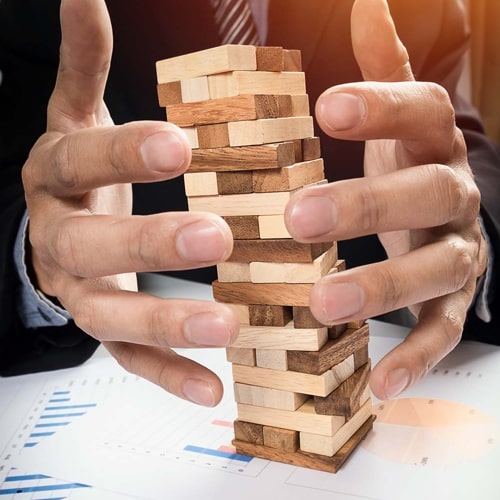

ERP Software in Pakistan
We Build ERP
That Gets Used
because we configure it around you.
Book a Free DemoHire the Best
Hire Better,
Faster!
HM Technologies delivers enterprise ERP solutions built for Pakistan's manufacturing sector.
Connect NowOur Vision to Grow Better
Countless
Happy Clients
We have clients across various sectors who uses our solutions. Get yours ERP according to your customised needs.
Connect Now
Your IT Business Partner
We have been implementing ERP in Pakistan since 2010. Textile mills, sugar plants, pharmaceutical manufacturers, packaging units and petroleum distributors. Different industries, same underlying problem: the business grew faster than the systems holding it together.
Our job is to close that gap. We implement ERPNext and Odoo, customize where the standard build does not fit, and stay on after go-live because that is usually when the real questions start.
We also provide IT consultancy, software design and development, professional services, and hardware deployment and maintenance, across the following verticals:

Muhammad Kashif,
Founder & CEO of HM Technologies


"Nationwide best ERP Solutions Provider"

Since 2010,
Operating in Pakistan.
We Serve
Effective Case Studies

Case Studies
NATIONAL PETROCARBON PVT. LTD

Case Studies
GLOBAL PEROLEUM FZC

Case Studies
Emadi Textiles

Case Studies
Amafhh Paper & Packaging
What an ERP Implementation Actually Looks Like
Five stages, and you know what is happening in each one. Most ERP solutions fail not because the software is wrong, but because nobody agreed on the plan before the work started.
Plan and Prepare
Discovery starts on your floor, not in a meeting room. We watch how orders move, where paperwork piles up, and who is quietly holding the process together with a spreadsheet. That becomes the project scope.
01
Design and Strategize
We take your operations and lay them against the platform, line by line. Everything that does not fit goes on a gap list with a fix, a cost and a timeline. You approve that list before we build.
02
Configure and Migrate
This is where the ERP software starts looking like your business. Approvals, item masters, costing structure, user permissions. Then your historic data moves across and gets checked against your own registers until both sides agree.
03
Training and Test
Training happens on your real transactions. Your storekeeper enters a real GRN, your accountant closes a real voucher. Anything that trips them up gets fixed before go-live, not after.
04
Go Live and Scale
We are present through go-live week. After that, support continues, modules get added as you need them, and we revisit the setup when the business has moved on enough to need it.
05
What Changes After an ERP System Goes Live
Our ERP's Ratings
Rated 4.6-stars by businesses that hate inefficiency as much as you do!
- 1 Enhanced Efficiency
- Your team stops spending mornings reconciling files that should have matched. The work that used to need three follow-up calls now sits in one place, with a status anyone can check.
- 2 Real-Time Visibility and Control
- Ask for a number and get one answer, not three. ERP software gives every department the same live figure, so the argument moves from whose file is right to what to do next.
- 3 Cost Reduction and Lean Manufacturing
- You find out where the margin went while the order is still on the floor. Estimated cost against actual, order by order, instead of a month-end surprise nobody can trace.
- 4 Quality and Compliance Assurance
- Every batch carries its own record, from raw material to dispatch. If a shade complaint or a recall lands, you can answer it from a screen instead of a store room.
- 5 Smarter Supply Chain and Revenue Growth
- Reorder points, supplier performance and demand patterns stop living in someone's head. Planning gets based on what the data shows, which usually shows something different to what everyone assumed.
Dedicated Team
Professional Individuals
We have a dedicated team that are experts in their jobs and they deliver exceptional results.
Director
Muhammad Kashif

Business Development Officer
Muhammad Noman

Customers Experience
Asif Memon
Managing Director HM Technologies delivered a seamless ERP implementation that transformed our operations. Their team clearly understood our business processes and customized the system perfectly. Support was excellent throughout the journey.
Sadia Awan
CEO HM Technologies implemented ERP for us with great planning, execution, and also given after-implementation support. Our business now runs more smoothly, with better control over finance, inventory, and operations.
Tahir Hussain
Emadi Textiles Their team implemented an ERP solution perfectly aligned with our textile operations. From weaving to finishing, everything is now fully integrated and transparent. Production planning and inventory control have become far more efficient.
Furqan Khatri
IT Manager They transformed our petroleum distribution operations through ERP. Stock management, tanker tracking, sales monitoring, and financials are now integrated on one platform. Their team guided us professionally throughout the implementation.
FAQs
Frequently Asked Questions
- 1 How much does ERP software cost in Pakistan?
- It depends on users, modules and how much customisation your process needs. ERPNext and Odoo are open source, so there are no per-seat licence fees. Most of the cost of ERP software in Pakistan sits in implementation, not the licence. Send us your requirements and we will give you a written figure.
- 2 How long does an ERP implementation take?
- Typically two to six months. Data migration stretches a timeline more than configuration does. Clean stock records and a tidy chart of accounts move things faster. We give you a date at kickoff and tell you honestly if a new ERP system is going to take longer.
- 3 How do we choose the best ERP software in Pakistan?
- Nobody can hand you a single answer to that. The best ERP software in Pakistan for a sugar mill is not the right fit for a retail chain. Judge on three things: whether the vendor understands your industry, what happens after go-live, and who else in your sector they have implemented for.
- 4 What is the difference between ERPNext and Odoo?
- We implement both. ERPNext handles manufacturing well out of the box, particularly production and inventory. Odoo has a wider module range and a smoother interface. The right choice depends on your process, not on which platform is better. We look first, then recommend, and explain why.
- 5 We are using Excel and it works. Why change?
- Excel is fine until a certain size. Trouble starts when three people keep three versions, a formula breaks quietly, or a costing question needs four files open. If none of that sounds familiar, you may not need ERP software yet. If all of it does, you already do.
- 6 Can it handle our specific industry process?
- That is what the fit-gap stage is for. Our ERP solutions cover textile, pharma, sugar, food, agrochemicals, retail and discrete manufacturing. Lots and shades. Batch and expiry. Cane season costing. Where the standard build falls short, we customize, and you approve the cost first.
- 7 What happens to our existing data?
- It comes across. Item masters, customers, suppliers, opening balances, stock, and history where you need it. We migrate, then reconcile against your own registers until both sides agree. If your current data has gaps, we flag them instead of importing the problem into a new system.
- 8 Do you provide support after go-live?
- Yes, and this is where most ERP solutions either stick or fall apart. We are present through go-live week, then support continues under an agreed arrangement. The questions that matter tend to arrive in month two, once people use the system for things training never covered.
- 9 Should we go for cloud ERP or on-premise?
- Cloud ERP in Pakistan suits most businesses now, especially with multiple locations or people working outside the office. On-premise still makes sense where data residency rules or plant connectivity are real constraints. We deploy both. Tell us your setup and we will give you a straight recommendation.
- 10 Do you build anything besides ERP?
- Yes. Alongside ERP we deliver software solutions including custom development, web development, and school, community and learning management systems. Integration work too: POS, e-commerce, banking feeds and biometric attendance. How straightforward an integration is depends on whether the other system has a usable API.
Blogs
Our Latest Posts
We write about ERP systems, technology shifts, and the everyday realities of running a business, all without the dense jargon that usually comes with the territory. Whether you are mid-implementation, weighing your options, or just curious about how the right systems can reshape the way you work, you will find something useful here. Expect practical insights, honest takes, and the occasional behind-the-scenes lesson from the projects we live and breathe. Settle in, browse at your own pace, and dig into the reads. Fresh perspectives, brought to you by the team at HM Technologies.