
ERP software is a single system that runs the core parts of a business, including sales, purchase, inventory, accounting, production, and HR. Instead of keeping each department on its own file or register, everything sits in one place and updates together.
If you run a factory in Karachi, a distribution setup in Lahore, or a retail chain anywhere in Pakistan, the question is usually the same. Where is my stock, what did I actually earn this month, and why do the numbers never match? An ERP system is built to answer those questions without three phone calls and a stack of spreadsheets.
What ERP software really means
ERP stands for Enterprise Resource Planning. The name sounds heavy, but the idea is simple.
Think of a shared ledger that every department writes into. Sales books an order. Stock is checked in real time. The store issues material. Accounts sees the entry the moment it happens. Nobody re-types the same data three times.
That’s the whole point. One database, many users, fewer surprises.
How an ERP system connects departments
Here’s a small example most business owners will recognise.
A customer places an order for 500 units. In a manual setup, sales writes it in a book, the store checks physical stock, production is informed by WhatsApp, and accounts finds out at invoicing time.
With an ERP system, the order is entered once. Stock levels drop automatically. If material is short, a purchase request can be raised. Production sees the job. Accounts sees the receivable. The owner sees all of it on one screen.
Nothing magical happens. The data just stops travelling by memory.
Problems ERP solutions can help you manage
Most businesses look at ERP after the same headaches repeat too often.
- Stock figures on paper don’t match what’s in the warehouse
- Recovery is slow because nobody tracks ageing receivables properly
- Costing is a guess, so pricing is a guess too
- Month-end closing takes two weeks
- Key information sits with one person, and that person goes on leave
- Multiple branches report in different formats
An ERP won’t fix a broken process on its own. But it does make weak processes visible, which is usually the first step.
Common ERP modules and features
Most ERP solutions are built in modules. You can start with a few and add more later.
Accounting and finance
General ledger, payables, receivables, bank reconciliation, and tax handling. This is where most Pakistani businesses see value first.
Inventory and warehouse
Item master, batch and serial tracking, stock transfers, and reorder levels. Useful if you deal in perishables, pharma, or anything with expiry.
Sales and purchase
Quotations, sales orders, supplier quotations, purchase orders, and delivery notes, all linked to stock and accounts.
Manufacturing
Bill of materials, work orders, job cards, and material requirement planning. This is where costing becomes real instead of estimated.
HR and payroll
Attendance, leave, and salary processing, which can reduce a lot of manual calculation at month end.
Reporting
Dashboards and reports that pull from live data rather than a file someone updated last Thursday.
What business automation actually changes
Business automation means letting the system handle repeated steps. Reorder alerts, recurring invoices, approval workflows, and scheduled reports are common examples.
The realistic benefits are these. Manual data entry can drop. Reports may become faster and more consistent. Approvals leave a trail, which helps with internal control. Decisions get made on current numbers instead of last month’s.
What it will not do is replace good management. A system reports what you tell it to record.
Signs your business may need ERP software
You probably don’t need ERP if you have ten transactions a day and one location. Consider it seriously if you notice several of these:
- You maintain the same data in more than one file
- Physical stock and book stock differ often
- You can’t produce a profit figure without a week of work
- Growth has made your current software slow or limited
- You have more than one branch, warehouse, or company
- Audits or compliance checks are painful every year
Choosing and implementing ERP in Pakistan
Start with your actual problems
Write down your top five operational issues before you see any demo. Then judge each ERP against that list, not against a feature brochure.
Look at total cost, not licence cost
Implementation, customisation, data migration, training, and yearly support all matter. Open source options like ERPNext and Odoo can reduce licence cost, but implementation effort still depends on your business requirements.
Check local support
Time zone, language, and site visits matter more than people expect. A local partner who understands FBR filing, sales tax invoices, and local documentation habits will save you time.
Clean your data first
Old item codes, duplicate customers, and unreconciled balances will follow you into the new system. Fix them before migration, not after.
Plan the go live
Most implementations run in phases. Finance and inventory first is a common starting point, with manufacturing or HR added later.
Mistakes to avoid
- Buying software before agreeing on internal processes
- Skipping training to save cost, then blaming the system
- Customising everything on day one instead of using standard features first
- Leaving the project entirely to the IT person with no owner involvement
- Expecting results in the first month
Adoption is usually the hard part. If your team doesn’t enter data properly, no ERP will help.
A note for businesses in Pakistan
Local conditions shape the choice. Many businesses here run multiple legal entities, deal in cash and credit sales together, manage sales tax and withholding, and operate across Karachi, Lahore, Faisalabad, and beyond. An ERP that handles multi company accounting and local tax documentation will fit better than a system designed only for a different market.
HM Technologies, based in Karachi and operating since 2010, works with businesses on ERPNext and Odoo ERP implementation, customisation, data migration, and training. Their work covers sectors such as textile, pharmaceuticals, food and beverages, and manufacturing, where inventory and costing usually drive the decision.
Frequently asked questions
How long does ERP implementation take? It depends on scope, data quality, and how many departments go live at once. A phased rollout starting with finance and inventory is common.
Is ERPNext or Odoo better? Both are capable open source platforms. The right one depends on your industry, workflow complexity, and the modules you need. A fit gap review is more useful than a general comparison.
Can a small business use ERP software? Yes. Many SMEs start with a few modules and expand later. The deciding factor is transaction volume and complexity, not company size alone.
Do we need to customise the system? Not always. Standard modules cover most common processes. Customisation is worth considering only where your process is genuinely different and adds value.
What happens to our old data? Historical masters and balances can usually be migrated. How much history you bring over is a business decision, and cleaner data makes the process easier.
Ready to look at your options?
If you’re weighing an ERP system for your business, start with a conversation about your current processes rather than a feature list. You can request a free consultation with HM Technologies at https://hm-technologies.com/get-free-consultation-today/ to discuss what would suit your requirements.
Related Posts
August 18, 2026
Why Pharma Cannot Run on Generic ERP
Batch tracking, expiry, and audits Ask anyone who has run a pharma plant about the…

August 11, 2026
Why ERP Projects Fail (And How to Get Yours Right)
When an ERP project goes wrong, people usually blame the software. They say it just…
July 17, 2026
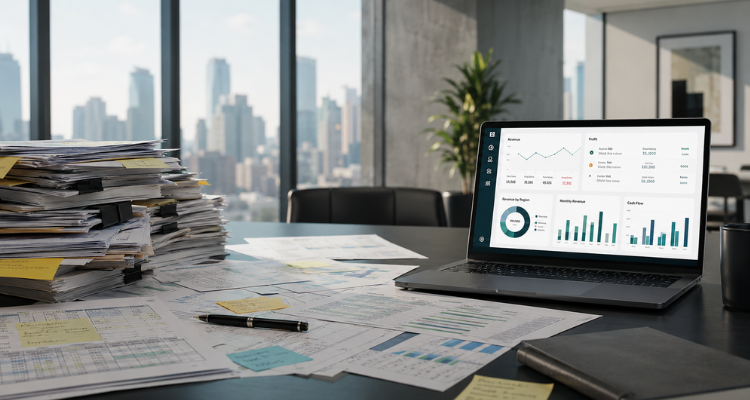
7 Signs Your Business Has Outgrown Spreadsheets And What to Do Next
Every growing business has that one spreadsheet. The master file. The one someone created years…

July 10, 2026
ERPNext vs Odoo: Which ERP Is Right for Your Pakistani Business?
If you have started searching for erp software in Pakistan, you have probably already come…